

| 2008 All rights reserved CLPS |
Cincinnati Lake & Pond Stone
A Tradition Of Erosion Control Excellence!
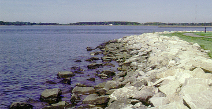
| WHAT IS IT? Riprap is a heavy stone facing (armor) on a shorebank used to protect it and the adjacent upland against wave scour. Riprap depends on the soil beneath it for support and should be built only on stable shores or bank slopes. Gabions are rectangular wire mesh baskets filled with rock at the project site to form flexible, permeable, monolithic structures such as retaining walls for commercial, industrial and road projects. They are also used for erosion control, bank stabilization, channel linings, and weirs. |
| CLPS C/O The Mountel Group PO Box 62626 Cincinnati, Ohio 45262 Ph: (513) 847-4473 clpsinfo@cincilinks.com |
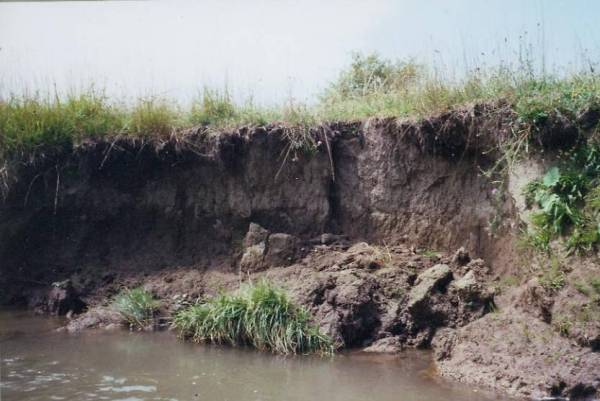
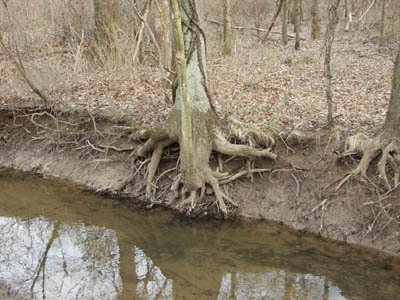
How do you know if there is a serious erosion problem on your shoreline?
Signs of serious problem situations include:
A large area of bare soil on a steep, high shoreline bank.
A measureable change of the shoreline over a period of time.
Leaning or downed trees with exposed roots on the shoreline.
Large patches of muddy water near a lakeshore, or unusually muddy streams during periods of high water or following a rainstorm.
Excessive deposits of sand or other sediments on the stream bed, or very wide, shallow areas in a stream.
How can shoreline erosion be controlled?
One of the best ways to control shoreline erosion is through preventive
measures. Some basic preventive guidelines include:
Preserve the rocks and vegetation which naturally occur along the shoreline.
Prevent impervious surface (i.e. roofs, driveways) runoff from flowing to the shoreline, especially bluff areas.
Avoid construction within 100 feet of the shoreline or the edge of nearshore bluffs.
Protect nearshore berms pushed up by ice action along lakeshores. They prevent excessive surface runoff and trap sand which
"nourishes" the beach.
Limit the amount of foot traffic and other recreational activities in erosion prone areas. Regardless of preventive measures, the right
combination of conditions (such as high water level, violent windstorms, drastic ice movement, and certain shoreline configurations) may
result in serious shoreline erosion.
There are three basic types of reactive shoreline erosion control methods:
Vegetative/No Mow: This method involves encouraging or planting trees or woody shrubs for the soil binding properties of their large root
systems, grass and other herbaceous plants to protect against raindrop impact and scouring from surface runoff, or emergent aquatic
plants to stabilize bottom sediments and dampen wave action.
Structural: This includes protective structures. The placement of rock of various sizes (referred to as rip-rap) has traditionally been most
common method. Other structural methods include bulkheads, gabions (rock filled baskets), and railroad ties. However, these other
methods are often visually unappealing, require more heavy equipment and technical expertise, and may be more prone to failure in
comparison to simple rip-rap.
Manipulative: Mostly used on streams, this includes removing streamflow obstructions, grading shoreline banks, or, in special
circumstances, rerouting the stream channel.
Signs of serious problem situations include:
A large area of bare soil on a steep, high shoreline bank.
A measureable change of the shoreline over a period of time.
Leaning or downed trees with exposed roots on the shoreline.
Large patches of muddy water near a lakeshore, or unusually muddy streams during periods of high water or following a rainstorm.
Excessive deposits of sand or other sediments on the stream bed, or very wide, shallow areas in a stream.
How can shoreline erosion be controlled?
One of the best ways to control shoreline erosion is through preventive
measures. Some basic preventive guidelines include:
Preserve the rocks and vegetation which naturally occur along the shoreline.
Prevent impervious surface (i.e. roofs, driveways) runoff from flowing to the shoreline, especially bluff areas.
Avoid construction within 100 feet of the shoreline or the edge of nearshore bluffs.
Protect nearshore berms pushed up by ice action along lakeshores. They prevent excessive surface runoff and trap sand which
"nourishes" the beach.
Limit the amount of foot traffic and other recreational activities in erosion prone areas. Regardless of preventive measures, the right
combination of conditions (such as high water level, violent windstorms, drastic ice movement, and certain shoreline configurations) may
result in serious shoreline erosion.
There are three basic types of reactive shoreline erosion control methods:
Vegetative/No Mow: This method involves encouraging or planting trees or woody shrubs for the soil binding properties of their large root
systems, grass and other herbaceous plants to protect against raindrop impact and scouring from surface runoff, or emergent aquatic
plants to stabilize bottom sediments and dampen wave action.
Structural: This includes protective structures. The placement of rock of various sizes (referred to as rip-rap) has traditionally been most
common method. Other structural methods include bulkheads, gabions (rock filled baskets), and railroad ties. However, these other
methods are often visually unappealing, require more heavy equipment and technical expertise, and may be more prone to failure in
comparison to simple rip-rap.
Manipulative: Mostly used on streams, this includes removing streamflow obstructions, grading shoreline banks, or, in special
circumstances, rerouting the stream channel.
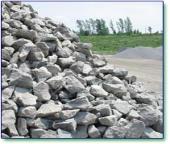
| 200mm (8") to 400mm (16") stones used for erosion control, bank stabilization, and drainage. |
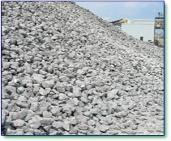
| 100mm (4") to 200mm (8") stones used for erosion control, bank stabilization, and drainage. |
Gabions
Rip-Rap


CLPS is a division of The Mountel Group LLC a Cincinnati Ohio Based Company.
Contact Us Today For A Free Consultation & Estimate!
| CLPS C/O The Mountel Group PO Box 62626 Cincinnati, Ohio 45262 Ph: (513) 847-4473 E-Mail clpsinfo@cincilinks.com |

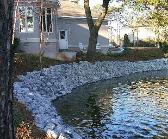
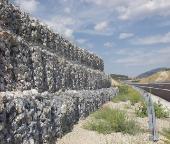

Sample Install
Contact Us Today For A Free Consultation & Estimate!

